

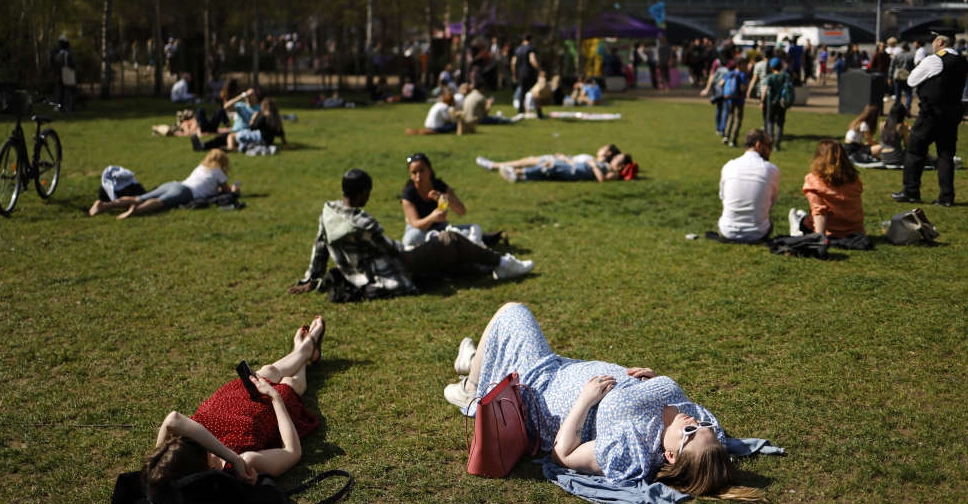
Britain's weather forecaster issued its first-ever red "Extreme Heat" warning for parts of England on Monday and Tuesday when temperatures are forecast to reach record highs, triggering a "national emergency" alert level.
Britain's weather forecaster issued its first-ever red "Extreme Heat" warning for parts of England on Monday and Tuesday when temperatures are forecast to reach record highs, triggering a "national emergency" alert level.
Much of Europe is baking in a heat wave that has pushed temperatures into the mid-40s Celsius in some regions, with wildfires raging across tinder-dry country in Portugal, Spain, France and Croatia on Thursday.
The highest ever recorded temperature in Britain was 38.7C (102 Fahrenheit) recorded in Cambridge University Botanic Garden on July 25, 2019. The Met Office said it was now forecasting temperatures of 40C for the first time in Britain.
"Exceptional, perhaps record-breaking temperatures are likely early next week," Met Office Chief Meteorologist Paul Gundersen said, predicting a 50% chance temperatures top 40C and 80% chance a new maximum temperature is reached.
"Nights are also likely to be exceptionally warm, especially in urban areas," he said in a statement. "This is likely to lead to widespread impacts on people and infrastructure."
Alongside, Britain's Health Security Agency (UKHSA) raised the heat health warning to Level 4 for England for Monday and Tuesday.
On the Met Office website, a Level 4 red alert is defined as a national emergency, and is used when a heatwave "is so severe and/or prolonged that its effects extend outside the health and social care system. At this level, illness and death may occur among the fit and healthy, and not just in high-risk groups."
The Met Office said "substantial" changes in working practices and daily routines would be required and there was a high risk of failure of heat-sensitive systems and equipment, which could lead to localised loss of power, water or mobile phone services.
"It's harder to cope with these types of temperatures in the UK because we're just not used to them," Hannah Cloke, climate expert at the University of Reading, told Reuters, alluding to the country's generally temperate, damp climate.
"It's about that lived experience of the heat and we don't have the houses designed to keep cool, we don't have air conditioning, and our infrastructure is not built for the heat at all."


 Trump says deal to end war to be signed Sunday, Iran questions timing
 India Air Force plane crash kills all five onboard
 Ukrainian strike kills one, wounds 3 in southern Russia
 Trump says US military strike killed leader of Venezuela's Tren de Aragua gang
 Qatar rejects media report on energy production decisions
 Trump says Iran war deal close as Strait of Hormuz tensions linger
 Victims' families mark Air India crash anniversary with prayers and tributes
 Ebola outbreak spreads to crowded displacement camp in Congo