
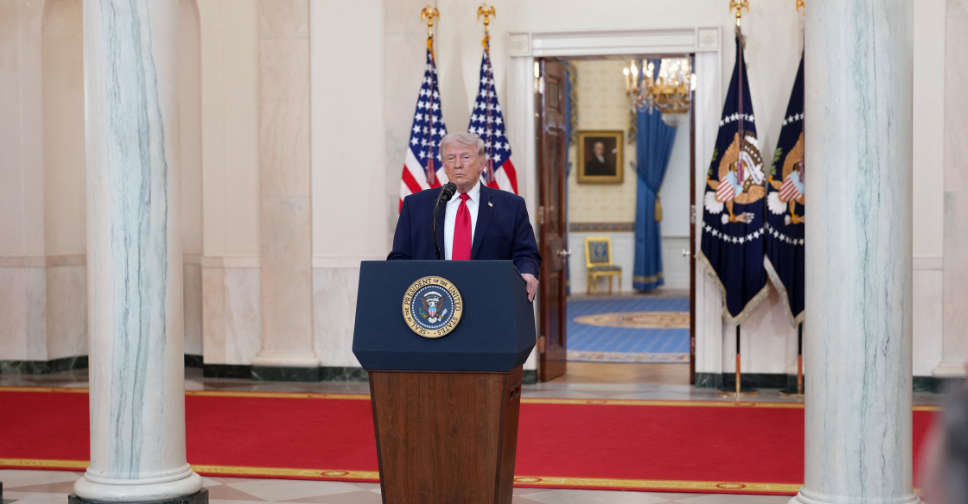
The United States will carry out aggressive strikes on Iran over the next two to three weeks and is nearing completion of its main strategic objectives in the war, President Donald Trump said in a televised address to the nation on Wednesday.
Addressing the US public, Trump said his military had delivered "swift, decisive, overwhelming victories on the battlefield" during 32 days of military strikes and that Iran was no longer a security threat.
He asked Americans to keep perspective about a war now in its fifth week, pointing out that the conflict was much shorter than the country's involvement in several previous wars.
"I can say tonight that we are on track to complete all of America's military objectives shortly, very shortly. We're going to hit them extremely hard over the next two to three weeks. We're going to bring them back to the stone ages where they belong," Trump said.
"In the meantime, discussions are ongoing... The new group is less radical and much more reasonable. Yet if during this period of time, no deal is made, we have our eyes on key targets."
Trump also thanked his allies in the Middle East, adding that the United States "will not let them get hurt or fail in any way, shape, or form."
Thousands of people have been killed across the Middle East since February 28, when the US and Israel struck Iran, triggering Iranian attacks on Israel, US bases, and the Gulf states, while opening a new front in Lebanon.
The conflict, which prompted Iran to shut the Strait of Hormuz, a key waterway carrying about a fifth of global oil supplies, has rattled financial markets and weighed on Trump's approval ratings months ahead of pivotal midterm congressional elections.
Trump praised the US's gas supply, stating "we are number one producer of oil and gas on the planet, without even discussing the millions of barrels that we're getting from Venezuela. Because of the Trump administration's policies, we produce more oil and gas than Saudi Arabia and Russia combined".
He added that the United States does not need the Strait of Hormuz, and challenged US allies who rely on oil in the region to work toward reopening it.
"Many Americans have been concerned to see the recent rise in gasoline prices here at home," Trump said. "This short-term increase has been entirely the result of the Iranian regime launching deranged terror attacks against commercial oil tankers of neighboring countries that have nothing to do with the conflict."
The International Monetary Fund, World Bank, and International Energy Agency on Wednesday warned the war was having "substantial, global and highly asymmetric" effects and said they would coordinate their response, including through potential financial support to those countries hit hardest.
NUCLEAR THREAT
In an interview with Reuters earlier on Wednesday, Trump said US-Israeli strikes had ensured Iran would not obtain nuclear weapons, adding that US forces could return with “spot hits" if the threat resurfaces.
"They were right at the doorstep (of a nuclear weapon)," Trump said in his TV address, without providing evidence.
"In these past four weeks, our armed forces have delivered swift, decisive, overwhelming victories on the battlefield," he said. "We are systematically dismantling the regime's ability to threaten America or project power outside of their borders."
Prior to Trump's address, Iranian President Masoud Pezeshkian said in a letter addressed to the American people that his country harbors no enmity towards ordinary Americans.
A senior Iranian source told Reuters on Wednesday that Tehran is demanding a guaranteed ceasefire to halt its attacks and said no talks have taken place through intermediaries on a temporary truce.
Trump said that discussions were ongoing with Iranian leaders he considered less radical than previous leaders.
"Yet if during this period of time, no deal is made we have our eyes on key targets," Trump said. "If there's no deal, we are going to hit each and every one of their electric generating plants, very hard and probably simultaneously."
Trump did not explicitly mention NATO in his address, but appeared to be sending a message to European allies, urging countries in need of oil to buy it from the United States or to “build up some delayed courage” and use the Strait of Hormuz.

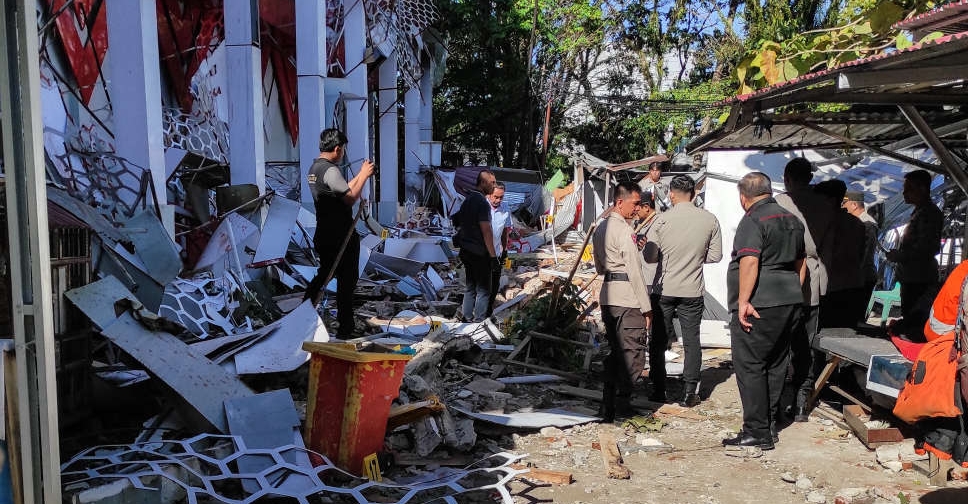 One killed as Indonesia earthquake damages buildings, triggers tsunami waves
 Florida vice mayor shot dead, husband jailed as suspect
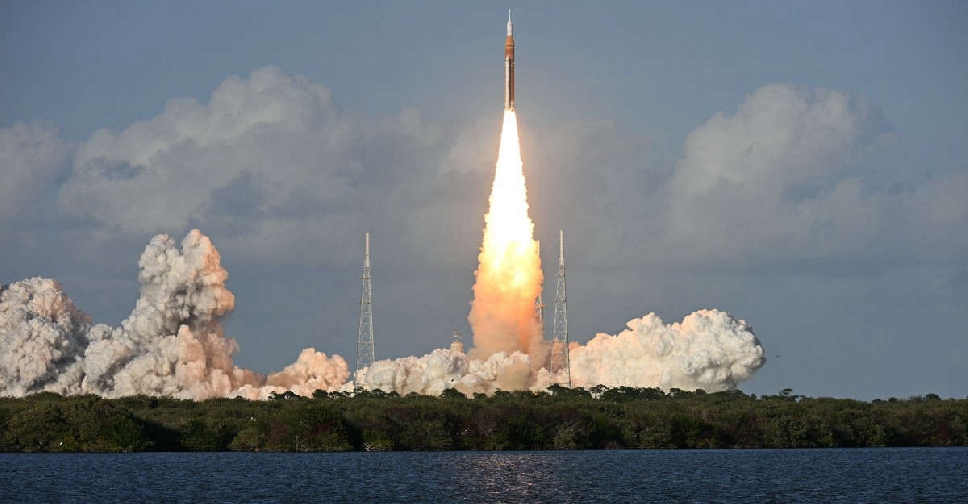 NASA launches first crewed lunar mission in half a century
 Tsunami warning issued after powerful Indonesia earthquake
 Trump says US may exit Iran war soon; threatens to quit NATO
 Italy recovers 19 bodies from migrant boat
 Trump says Iran has asked for a ceasefire, US wants to see Hormuz open first
 In historic first, Trump attends Supreme Court arguments