


Jailed South African Paralympic star Oscar Pistorius was granted parole on Friday after serving nine years for killing his girlfriend Reeva Steenkamp, and will be released on January 5, authorities said.
Known as the "Blade Runner" for his carbon-fibre prosthetic legs, Pistorius went from a public hero as a Paralympic champion to a convicted killer in hearings that caught the world's attention.
Pistorius shot and killed Steenkamp on Valentine's Day in 2013.
He was initially jailed for five years in 2014 for culpable homicide by a high court. But the Supreme Court of Appeal in late 2015 found him guilty of the more serious charge of murder after an appeal by prosecutors.
His total sentence was lengthened to six years in 2016, less than half the 15-year minimum term sought by prosecutors.
In 2017, the Supreme Court more than doubled his total sentence to 13 years and five months, saying the six-year jail term was "shockingly lenient".
"Mr. Pistorius will complete the remainder of the sentence in the system of community corrections and will be subjected to supervision in compliance with parole conditions until his sentence expires," the Department of Correctional Services said on Friday.
Ahead of the hearing, Rob Matthews, spokesperson for Steenkamp's mother June, read out a statement from her detailing the impact the murder had had on the family.
"I'm not convinced that Oscar has been rehabilitated. Rehabilitation requires someone to engage honestly with the full truth of his crime and the consequences thereof," June Steenkamp said in the remarks read out by Matthews.
After the parole was announced, the Steenkamp family's lawyer Tania Koen told Reuters the decision had not come as a surprise.
June Steenkamp was satisfied that the parole board had considered her statement, Koen said.
"They imposed certain conditions on Oscar’s parole, which is that he must continue with anger management therapy,” Koen added.
Pistorius's lawyer did not immediately respond to requests for a comment.
Several factors are typically taken into account by a parole board, including the nature of the crime, the possibility of reoffending, conduct in prison, physical and mental wellbeing and potential threats a prisoner may face if released.
Pistorius was denied parole in March after it was ruled that he had not completed the minimum detention period required to be considered for parole.
However, the Constitutional Court said in October that Pistorius had served half of his sentence by March 21, which meant he was eligible, after his sentence was backdated to July 2016 instead of November 2017.


 At least 14 killed in explosion at weapons depot in Syria
 US hits five Iranian oil tankers after attack on Navy ships
 UK flights resume after major air traffic outage but airports warn of more disruption
 Serbia's President Vucic dissolves parliament, calls snap elections
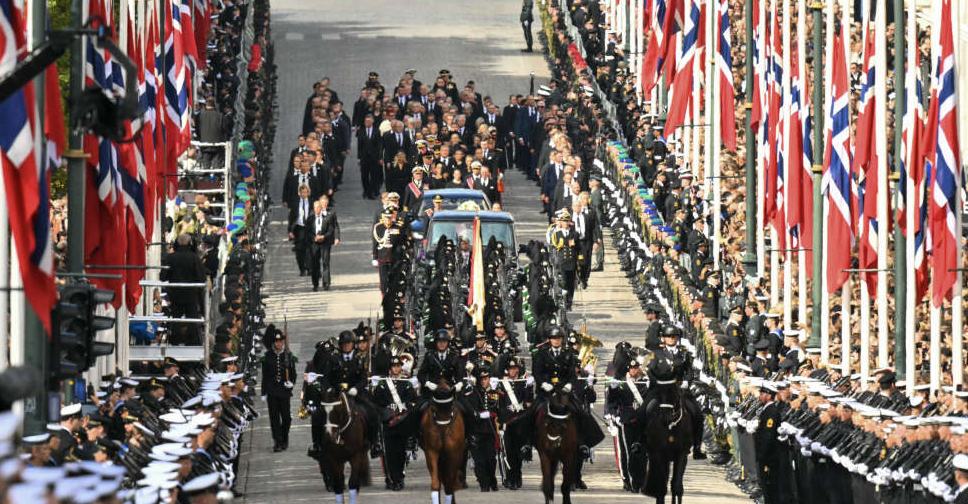 With large crowds attending, Norway lays King Harald to rest
 Jordan intercepts 18 Iranian ballistic missiles
 Air traffic control issue disrupts flights at major UK airports
 At least 73 injured after Houthi rebels attack Saudi civilian and energy facilities