

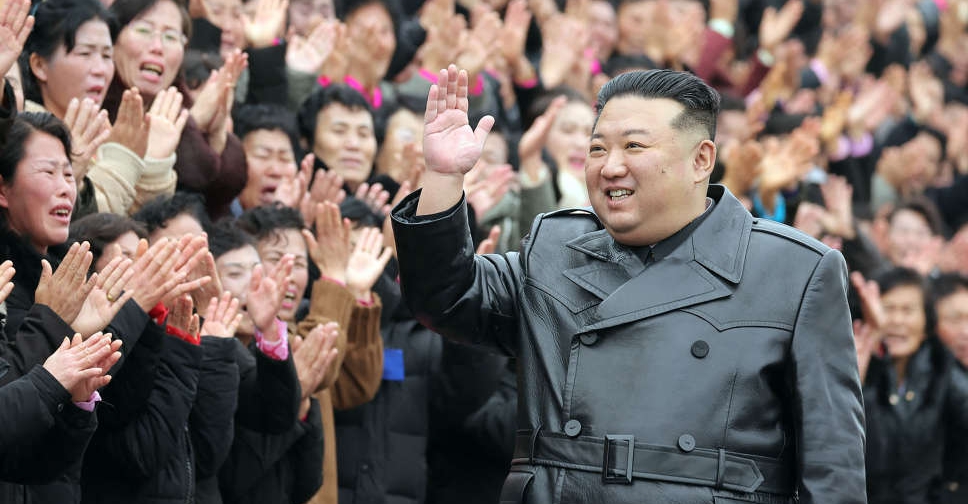
North Korea fired an intercontinental ballistic missile on Monday that has a range to hit anywhere in the United States, said South Korea and Japan, marking its second launch in hours as Pyongyang condemned a US-led show of force as "war" moves.
The missile has a potential to travel more than 15,000 km, meaning it can reach anywhere in Japan and the mainland United States, Japan's Parliamentary Vice Minister of Defense Shingo Miyake said.
South Korea's National Security Council said it was a solid-fuel intercontinental ballistic missile (ICBM), labelling the launch a destabilising act that ignored international warnings and multiple UN Security Council resolutions.
President Yoon Suk Yeol had ordered the upgrading of the effective operation of "nuclear deterrence" by South Korea and the United States, it said in a statement.
Monday's missile was fired from an area near the capital Pyongyang towards the sea off the North's east coast and flew about 1,000 km, South Korea's Joint Chiefs of Staff said.
Japan's defence ministry reported the flight lasted 73 minutes, just short of the 74 minute flight by an ICBM North Korea fired in July. It reached a maximum altitude of more than 6,000 km and fell into the sea west of Hokkaido outside Japan's exclusive economic zone, Japan said.
Such launches underscore the North's efforts to advance its arsenal with longer-range weapons that could potentially reach the mainland United States.
The area near the international airport serving Pyongyang is where the North previously launched ICBMs and is suspected to be the location of a missile assembly facility.
The North's latest, solid-fuel Hwasong-18 ICBMs have been launched from near Pyongyang, at a grass field that analysts said is likely reinforced with concrete for the heavy launch vehicle.
Monday's missile launch came after North Korea fired a short-range ballistic missile on Sunday night, flying about 570 km and falling into the ocean.
North Korea followed up that launch with a fiery statement condemning the United States for orchestrating what it called a "preview of a nuclear war," including the arrival of a nuclear-powered submarine in South Korea on Sunday.


 Trump adds seven countries to full travel ban list
 Indian parliament votes to allow private firms in nuclear power sector
 Doctors in England start five-day walkout during flu surge
 Israeli settler kills 16-year-old Palestinian in West Bank, mayor says
 Paris' Louvre reopens partially but staff vote to extend strike
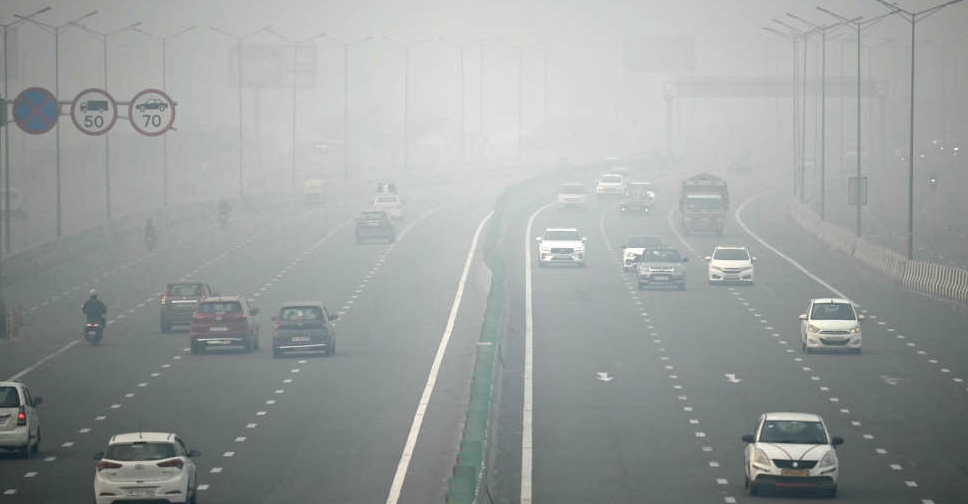 Delhi restricts vehicles, office attendance in bid to curb pollution
 India summons Bangladesh envoy over security concerns in Dhaka
 Alleged Bondi gunman charged with 15 murders as funerals of victims begin