

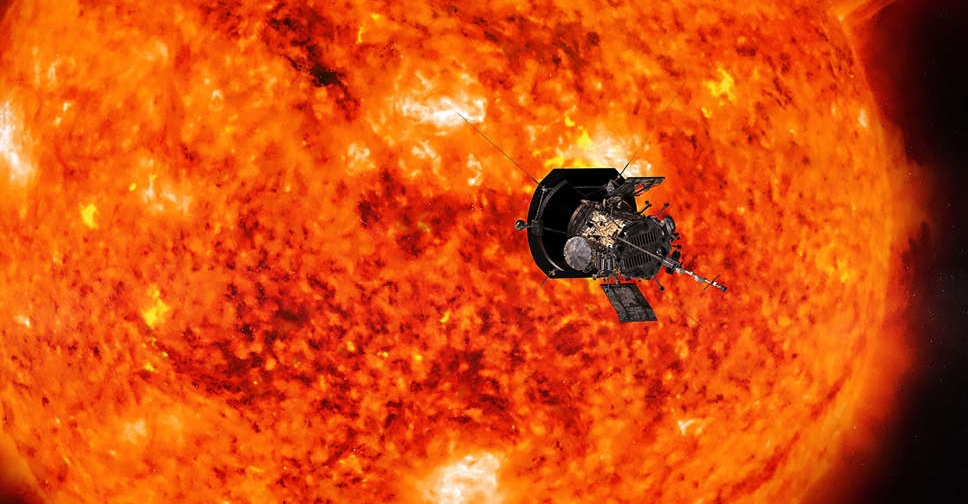
NASA’s Parker solar probe is safe and operating normally after successfully completing the closest-ever approach to the sun by any human-made object, the space agency has said.
The spacecraft passed just 6.1 million kilometres from the solar surface on December 24, flying into the sun’s outer atmosphere – the corona – on a mission to help scientists learn more about Earth’s closest star.
The agency said the operations team at the Johns Hopkins University applied physics laboratory in Maryland received the signal, a beacon tone, from the probe shortly before midnight on Thursday.
The spacecraft is expected to send detailed telemetry data about its status on 1st January.
Moving at up to 692,000 km/h, the spacecraft endured temperatures of up to 982 degrees Celsius.
“This closeup study of the sun allows Parker solar probe to take measurements that help scientists better understand how material in this region gets heated to millions of degrees, trace the origin of the solar wind (a continuous flow of material escaping the sun), and discover how energetic particles are accelerated to near light speed,” NASA said.
The Parker solar probe was launched in 2018 and has been gradually circling closer towards the sun, using fly-bys of Venus to gravitationally pull it into a tighter orbit with the sun.

 US skips congressional review to approve arms sale to Israel
 Partial resumption of air navigation in Qatar
 Kuwait and Qatar thwart fresh wave of Iranian attacks
 After a week of war, Trump demands Iran's 'unconditional surrender'
 Ex-rapper's party set to sweep Nepal election
 Israeli airforce pounds Beirut, Lebanon death toll rises
 US releases Epstein-related FBI interviews mentioning Trump
 Hezbollah warns Israeli residents to evacuate towns near border