

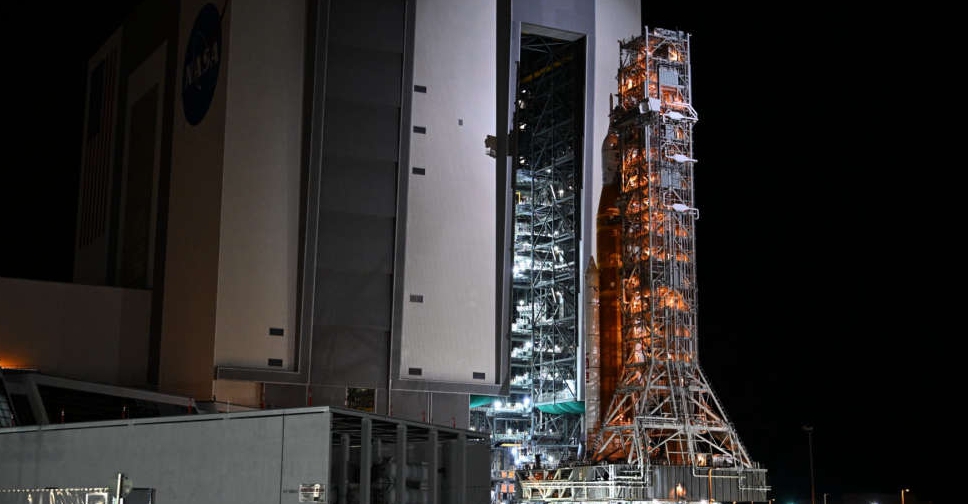
NASA's gigantic Space Launch System moon rocket, topped with an uncrewed astronaut capsule, began an hours-long crawl to its launchpad on Tuesday night ahead of its debut test flight this month.
The 98 metre rocket is scheduled to embark on its first mission to space, without any humans, on August 29.
It will be a crucial, long-delayed demonstration trip to the moon for NASA's Artemis program, the United States' multibillion-dollar effort to return humans to the lunar surface as practice for future missions to Mars.
The Space Launch System emerged from its assembly building at NASA's Kennedy Space Center in Florida about 10 p.m. EDT (0200 GMT) on Tuesday and began a 6-kilometre trek to its launchpad.
Moving less than 1.6 kph, the rollout will take roughly 11 hours.
Sitting atop the rocket is NASA's Orion astronaut capsule. It is designed to separate from the rocket in space, ferry humans toward the moon and rendezvous with a separate spacecraft that will take astronauts to the lunar surface.
For the August 29 mission, called Artemis 1, the Orion capsule will launch on top of the Space Launch System without any humans and orbit the moon before returning to Earth for an ocean splashdown 42 days later.
If bad launch weather or a minor technical issue triggers a delay on August 29, the National Aeronautics and Space Administration has backup launch dates on September 2 and September 5.


 Hezbollah warns Israeli residents to evacuate towns near border
 US House rejects war powers resolution, backs Trump on Iran war
 GCC and EU ministers urge immediate halt to Iranian attacks
 Trump wants say on Iran's next leader
 US, Venezuela agree to re-establish diplomatic ties
 British PM Starmer to send four Typhoon jets to Qatar
 Arab Interior Ministers Council condemns Iranian attacks
 Bombing of Tehran intensifies as war enters day six