

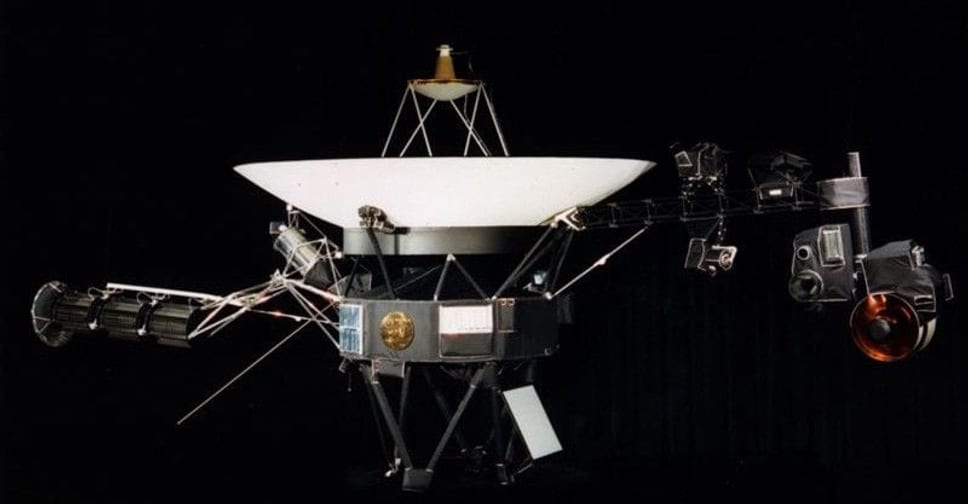
NASA confirmed on Thursday that its Voyager 1 probe has achieved an unprecedented distance milestone — the first spacecraft to travel beyond a light-day from Earth — while flying into an uncertain future in interstellar space.
The US space agency said it received a radio signal from the robotic explorer, launched in 1977, indicating that it passed the distance that light travels in 24 hours — about 16 billion miles (26 billion km) — as expected on Wednesday at 5:16 a.m. EST (1016 GMT).
Voyager 1 is the most distant human-made object.
NASA waited a day to make the official announcement because it took about that long for the spacecraft's signal to reach Earth.
"Travelling a light-day is a singular feat for a spacecraft, but Voyager is so much more than a distant traveller. The Voyager mission would be remarkable just for what it contributed to planetary science with the Grand Tour of the outer planets," Joe Westlake, director of NASA's heliophysics division, said in a statement released by the agency.
"But it went on to become central to NASA's fleet of heliophysics missions offering insights into the star that we all revolve around, the sun," Westlake said.
Voyager 1 journeyed past Jupiter and Saturn, the solar system's two largest planets, earlier in its mission. It continues to gather scientific data.
Voyager 1 is flying at almost 38,000 miles per hour (61,000 kph). It crossed the outer edge of the heliosphere, a protective bubble of particles and magnetic fields produced by the sun, to enter interstellar space in 2012.
Its twin, Voyager 2, was also launched in 1977 and entered interstellar space in 2018.
A representative at NASA's Jet Propulsion Laboratory said this week that recent power-saving measures could give the two Voyager spacecraft enough power to stay in communication with Earth for three to four more years.
Voyager 1 is still collecting data in the near-vacuum of interstellar space on effects from the sun such as solar storms that cause shocks and pressure fronts that extend as far away as the probe's current location.
The 50th anniversary of its launch is next year.

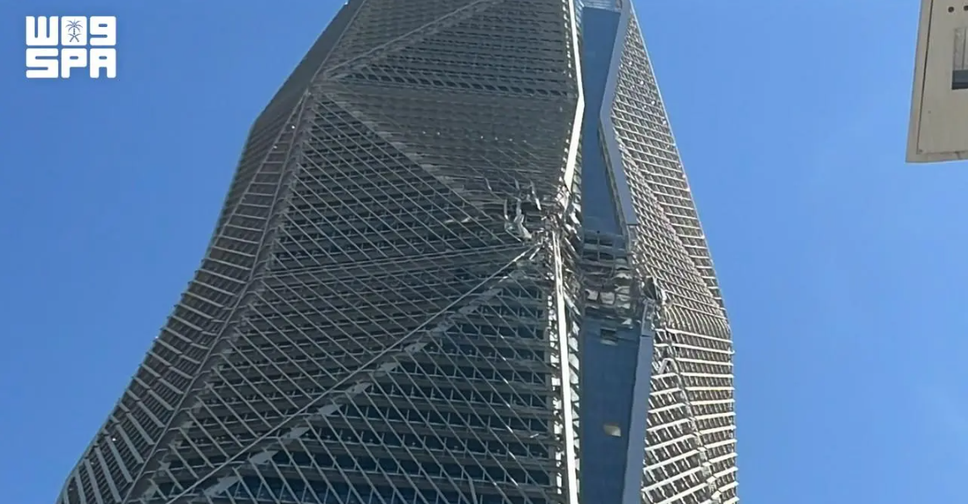 Houthi attack on Riyadh tower causes damage, no injuries reported
 Top UN court finds Myanmar committed genocide against Rohingya minority
 China and Russia release 'peace declaration' after Trump, Xi, Putin meeting
 Denmark ratifies Trump deal over Greenland
 Saudi coalition reports damage after Houthi missile threat towards Riyadh
 More than 47,000 evacuated in India ahead of Cyclone Akvan
 Israel launches ground operation in central Gaza
 Xi, Putin blast Western 'protectionism', sanctions as Trump lands in China