

Japan's SLIM spacecraft has regained power, its space agency said on Monday, more than a week after it achieved an unconventionally precise lunar landing but ran out of electricity because its solar panels were at the wrong angle.
The Japan Aerospace Exploration Agency (JAXA) re-established communication with its Smart Lander for Investigating Moon (SLIM) late on Sunday, a JAXA spokesperson said, nearly nine days after the probe's touchdown made Japan the fifth country to put a spacecraft on the moon.
The probe was likely able to generate power thanks to a change in the sunlight's direction, JAXA said.
SLIM resumed its operations to analyse the composition of olivine rocks on the lunar surface with its multi-band spectral camera, in search of clues about the origin of the moon, the agency added.
It touched down on the moon within 55 m of its target in a crater near the lunar equator on Jan. 20. JAXA said it proved an advancement in what it called vision-based "pinpoint" landing - a technology that could be a powerful tool for future exploration of hilly moon poles seen as a possible source of fuel, water and oxygen.
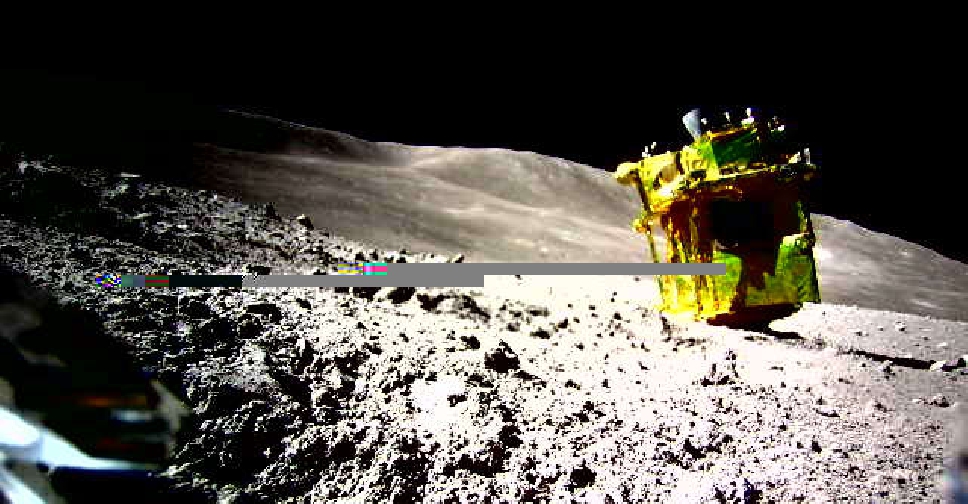
SLIM lost the thrust of one of its two main engines shortly before the touchdown for unknown reasons and ended up drifting a few dozen metres away from the target. The lander safely stopped on a gentle slope but appeared toppled with an engine facing upward in a picture taken by a baseball-sized wheeled rover it deployed.
The probe's solar panels faced westward due to the displacement and could not immediately generate power. JAXA manually unplugged SLIM's dying battery 2 hours and 37 minutes after the touchdown as it completed the transmission of the lander's data to the earth.
JAXA does not have a clear date when SLIM will end its operation on the moon, but the agency has previously said the lander was not designed to survive a lunar night. The next lunar night begins on Thursday.
The Lunar Excursion Vehicle 2 (LEV-2 / SORA-Q) has successfully taken an image of the #SLIM spacecraft on the Moon. LEV-2 is the world’s first robot to conduct fully autonomous exploration on the lunar surface. https://t.co/NOboD0ZJIr pic.twitter.com/mfuuceu2WA
— JAXA Institute of Space and Astronautical Science (@ISAS_JAXA_EN) January 25, 2024


 Zohran Mamdani wins NYC mayoral race, capping meteoric rise
 Kalmaegi death toll climbs to 66 as Philippine survivors confront destruction
 China's Shenzhou-20 return mission delayed due to space debris impact
 At least 7 dead after UPS plane crashes in Kentucky, erupts into ball of fire
 Former US VP Dick Cheney dies at 84
 Dozens killed, army helicopter downed as Typhoon Kalmaegi hits Philippines
 Trump threatens to cut funds for New York City if Mamdani wins mayoral race
 Worker trapped under collapsed medieval tower in Rome dies