
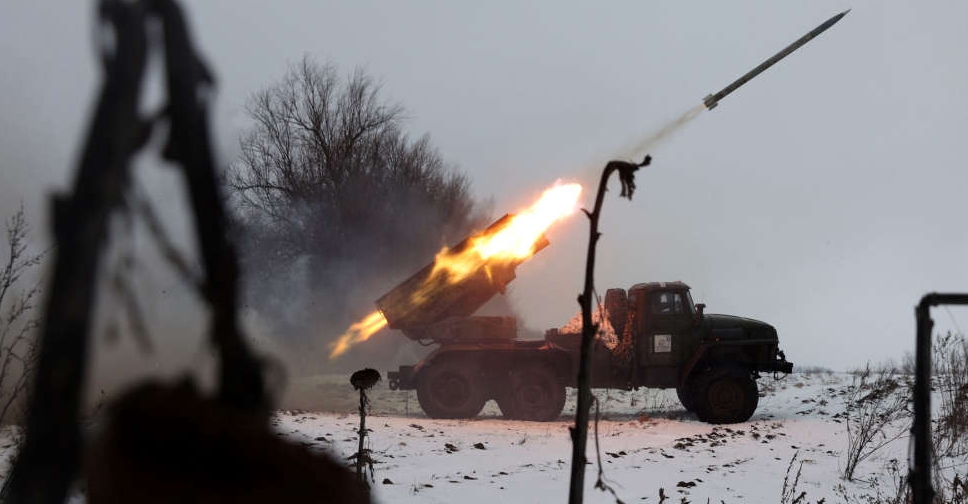
The European Union vowed to increase pressure on Moscow "until Ukraine is liberated" as it adopted a tenth package of sanctions on Russia.
"We now have the most far-reaching sanctions ever - depleting Russia's war arsenal and biting deep into its economy," European Commission chief Ursula von der Leyen said on Twitter, adding the bloc was turning up the pressure on those trying to circumvent EU sanctions.
EU foreign policy chief Josep Borrell warned the bloc would continue to pile more sanctions on Moscow.
"We will continue to increase pressure on Russia - and we will do it for as long as needed, until Ukraine is liberated from the brutal Russian aggression," he said in a statement.
Borrell said the latest sanctions tackled the banking sector, Moscow's access to technology that can be used for civilian and military purposes and advanced technologies.
Ukrainian President Volodymyr Zelenskiy welcomed the new punitive measures as "new powerful steps against the military industry and the financial sector of the terrorist state".
Speaking in his nightly video address, Zelenskiy said Ukraine was working to extend sanctions even further to cover Russia's nuclear sector, the state-owned nuclear energy company Rosatom "and all those involved in the missile programme and the nuclear blackmail of the terrorist state".
Russian reaction to the new sanctions has so far been muted.
Russia's Commissioner for Human Rights Tatyana Moskalkova said her inclusion on the list "violates the Universal Declaration of Human Rights and all other international legal acts concerning human rights".
The new EU package adds electronic components used in Russian weapons systems retrieved on the battlefield, including drones, missiles, helicopters, as well as specific rare earth materials, electronic integrated circuits, and thermal cameras to the list of banned exports.
It also imposes tighter export restrictions on another 96 entities for supporting Russia's military and industrial complex, including for the first time seven Iranian entities manufacturing military drones used by Moscow.
Additional restrictions are imposed on imports of goods which generate significant revenues for Russia, such as asphalt and synthetic rubber.
Separately, the EU imposed sanctions on 11 individuals and seven entities linked to the Wagner group, whose mercenaries are fighting in Ukraine but are also involved in conflicts in African countries such as Mali.
Borrell said Wagner's activities endangered international peace and security as it does not operate within any legal framework.
Among those blacklisted are two of the group's commanders actively involved in the capture of the Ukraine town of Soledar last month and the head of Wagner in Mali, according to an EU statement.
Wagner's head, former restaurateur Yevgeny Prigozhin, acknowledged the measures "will make our work harder" by making it more difficult to secure weapons, but expressed confidence his group would be able to cope.
"We have pretty good channels with European manufacturers," Prigozhin said in a statement published on Telegram by his press service.
"Among other things, we can barter for gold bars as well as getting weapons in non-commodity deals ... to pay for the weapons we receive from the United States and Europe."


 Trump touts $5,000 payout if Republicans win as Vance waits in wings
 Search expands after Philippine ferry fire kills five and leaves dozens missing
 Trump says Iran war to end after US midterm elections
 US military says it struck vessel in Caribbean, killing 3
 At least 14 killed in explosion at weapons depot in Syria
 US hits five Iranian oil tankers after attack on Navy ships
 UK gives air traffic provider a week to probe outage that halted flights
 Serbia's President Vucic dissolves parliament, calls snap elections