

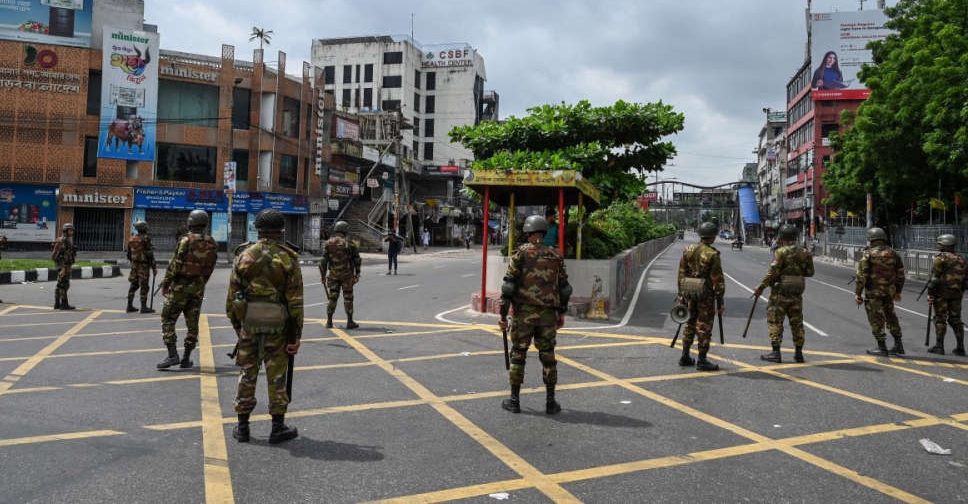
Bangladesh soldiers patrolled the deserted streets of Dhaka, on Saturday during a curfew meant to quell deadly student-led protests against government job quotas that have killed at least 105 people this week.
A suspension on internet and text message services has remained in place since Thursday, cutting off Bangladesh from the world as police cracked down on protests that have continued despite a ban on public gatherings.
Overseas telephone calls mostly failed to connect, and the websites of Bangladesh-based media organisations did not update, and their social media handles remained inactive.
In addition to the deaths, the clashes have injured thousands, according to data from hospitals across Bangladesh. The Dhaka Medical College Hospital received 27 dead bodies between 5 p.m. and 7 p.m. (1100-1200 GMT) on Friday.
For five days, police have fired tear gas and hurled sound grenades to scatter protesters as demonstrators clashed with security personnel, throwing bricks and igniting vehicles.
The demonstrations - the biggest since Prime Minister Sheikh Hasina was re-elected for a fourth successive term this year - have also been fuelled by high unemployment among young people, who make up nearly a fifth of the South Asian nation's 170 million people.
With the death toll climbing and police unable to contain the protests, Hasina's government imposed a national curfew and deployed the military.
The curfew was eased for two hours from noon on Saturday to allow people to shop for supplies and complete other chores, television channels reported. It will last until 10 a.m. (8 a.m. UAE time) on Sunday, when the government will assess the situation and decide the next course of action, the reports added.
TV footage showed that army personnel inspected the identification cards of those venturing out on the streets at different check points.
The nationwide unrest broke out over student anger against the controversial quotas for government jobs, including 30 per cent for the families of those who fought for independence from Pakistan.
Hasina's government had scrapped the quota system in 2018, but a court reinstated it last month. The state appealed against the reinstatement, and the Supreme Court suspended it for a month, pending a hearing on August 7.
In the central Dhaka district of Narsingdi, protesters stormed a jail on Friday and freed over 850 inmates before setting fire to the facility, TV channels reported, citing police. Scattered incidents of arson were also reported on Saturday.
Hasina dropped plans to leave on Sunday for visits to Spain and Brazil due to the protests, the AFP news agency reported citing her press secretary.
Many opposition party leaders, activists and student protesters had been arrested, said Tarique Rahman, the exiled acting chairman of the main opposition Bangladesh Nationalist Party. Police arrested Nahid Islam, a leading coordinator of the students' agitation, at 2 a.m. on Saturday, the protesters said in a text message.
Reuters could not independently confirm the arrests.
International rights groups have criticised the internet suspension and actions of security forces. The European Union said it is deeply concerned by the violence and loss of life.

 Iran names Mojtaba Khamenei as new supreme leader
 Trump says he is 'nowhere near' deciding to send troops to Iran
 Lebanon parliament extends its own mandate for two years as war intensifies
 France to deploy almost dozen warships, mulls Hormuz mission, Macron says
 32 civilians injured in Iranian drone attack in Bahrain's Sitra
 Indonesia searches for five missing after landfill collapse kills four
 GCC permanent representatives meet UN chief
 Qatar arrests 313 individuals for spreading misinformation