

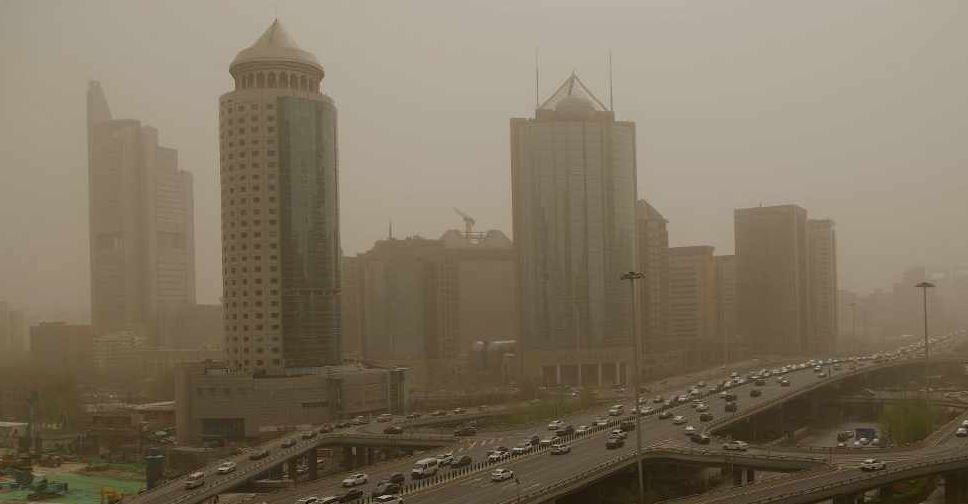
The Chinese capital Beijing woke on Sunday morning shrouded in thick dust carrying extremely high levels of hazardous particles, as a second sandstorm in two weeks hit the city.
Visibility in the city was reduced, with the tops of some skyscrapers obscured by the sandstorm, and pedestrians were forced to cover their eyes as gusts of dust swept through the streets.
Beijing's official air quality index reached a maximum level of 500 on Sunday morning, with floating particles known as PM10 surpassing 2,000 micrograms per cubic metre in some districts.
Readings of smaller PM2.5 particles were above 300 micrograms per cubic metre, far higher than China's standard of 35 micrograms.
PM2.5 particles are especially harmful because they are very tiny and can enter the bloodstream, while PM10 is a larger particle that can enter the lungs.
The China Meteorological Administration issued a yellow alert on Friday, warning that a sandstorm was spreading from Mongolia into northern Chinese provinces including Inner Mongolia, Shanxi, Liaoning and Hebei, which surrounds Beijing.
The meteorological office said the recent sandstorms to hit Beijing originated from Mongolia, where relatively warmer temperature this spring and reduced rain resulted in larger areas of bare earth, creating favorable conditions for sandstorms.
Beijing might face more sandstorms in April due to the unfavorable weather this year, the meteorological office said.


 Iran rejects Trump's talk of negotiation as Israel and Iran launch airstrikes
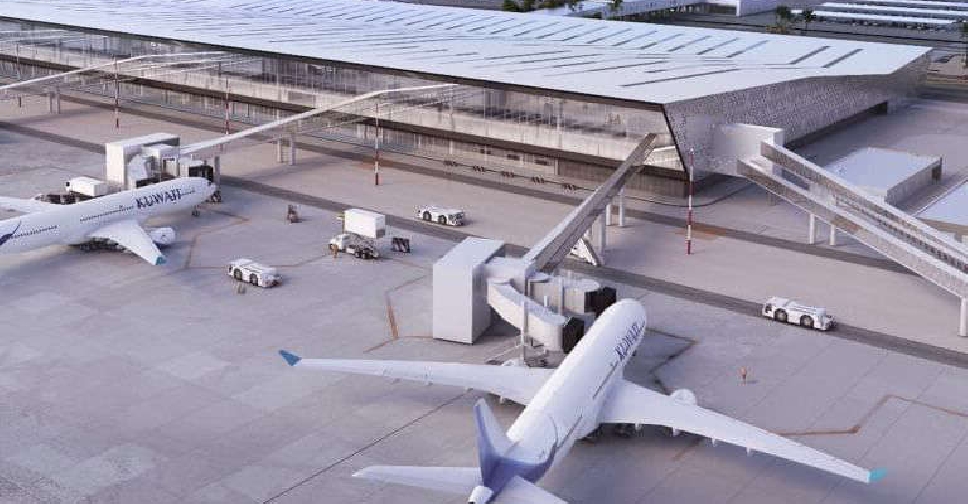 No injuries reported as drone attack hits fuel tank at Kuwait's airport
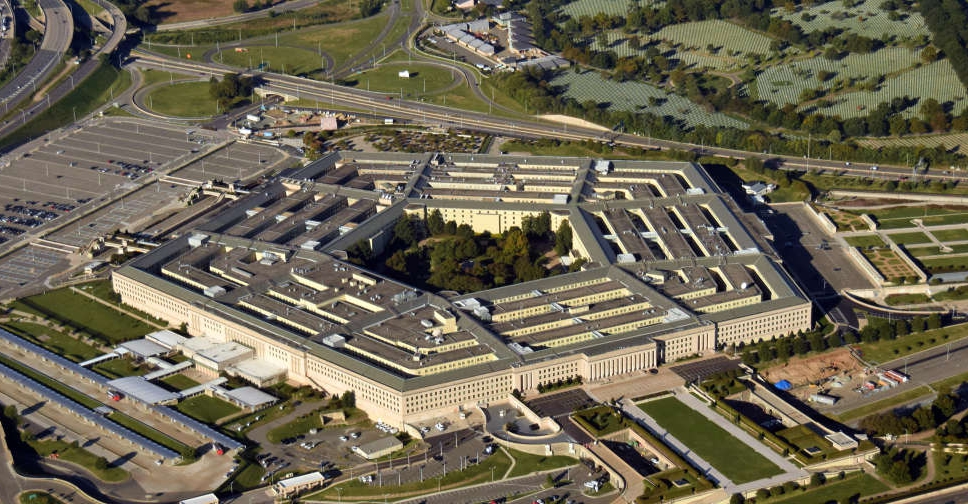 US expected to send thousands more soldiers to Middle East
 Philippines works with Washington to obtain oil from US-sanctioned countries
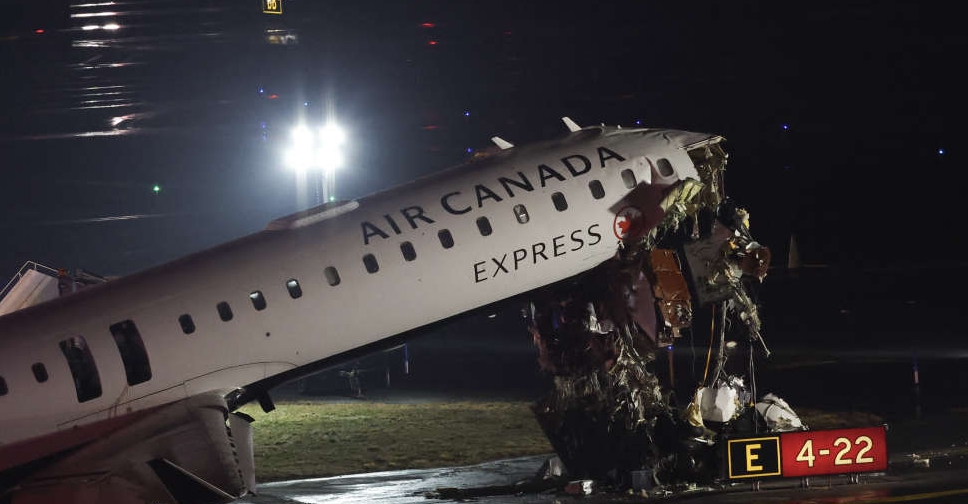 US safety agency says tracking system failed at LaGuardia during jet collision
 Russia fires record 948 drones against Ukraine over 24 hours, Kyiv says
 Death toll rises to 69 in Colombian military plane crash
 One killed, five injured in Bahrain from Iran strikes