

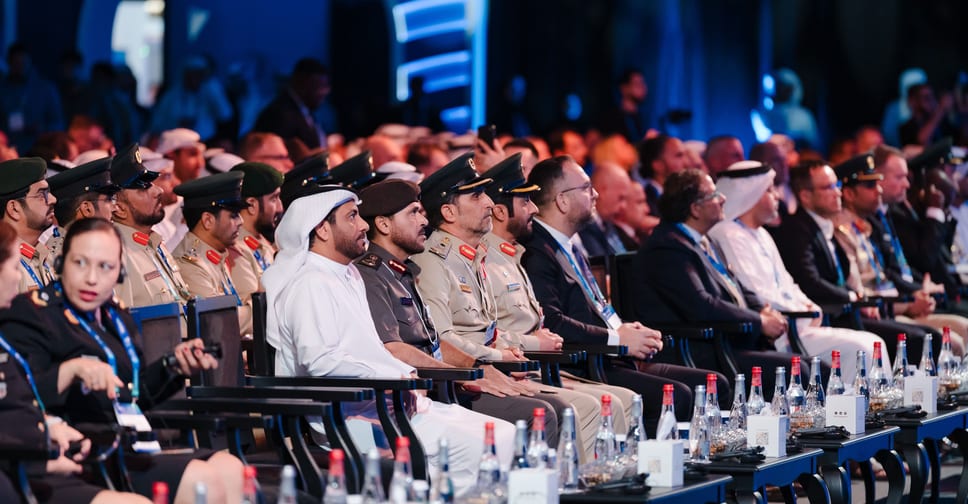
Police and security leaders at the World Police Summit in Dubai have called for stronger international cooperation as new technologies reshape the nature of cross-border crime and security threats.
Discussions on the opening day focused on the growing challenges posed by artificial intelligence, encrypted communications, cryptocurrencies and other technologies increasingly exploited by criminal networks.
In his opening address, Colonel Dr. Expert Rashid Hamdan Al Ghafri, Chairman of the World Police Summit Secretariat and Deputy Director of the General Department of Forensic Science and Criminology for Administrative Affairs at Dubai Police, stressed that rapidly evolving security challenges require police organisations to move beyond communication and coordination towards delivering measurable results.
He highlighted the importance of sharing expertise, developing capabilities and uniting international efforts to combat crime in all its forms.
Citing estimates from the United Nations Office on Drugs and Crime (UNODC), he noted that transnational organised crime generates more than $870 billion annually, equivalent to approximately 1.5 per cent of global GDP.
Al Ghafri also highlighted the growing risks of online fraud, ransomware and cybercrime, referring to estimates suggesting that the global annual cost of cybercrime could exceed $10.5 trillion.
“Borders give way to shared intelligence.”
— World Police Summit (@PoliceSummit) November 16, 2026
Col. Dr. Rashid Hamdan Al Ghafri, Secretary General of the World Police Summit & Deputy Director of the General Department of Forensic Sciences & Criminology at Dubai Police,, opened Day 1 in the Plenary with the keynote “A Shared… pic.twitter.com/3xqDsYBHoK
INTERPOL also highlighted international cooperation as crucial to disrupting financial crime, tracing criminal assets and dismantling organised crime networks.
Stephen Fry, Executive Director of Investigation Support, pointed to an attempted multimillion-dollar fraud targeting a company in Singapore, where cooperation between authorities in Singapore and Oman through INTERPOL channels helped stop the fraudulent transfer.
He also highlighted the organisation's Silver Notice initiative, which allows countries to request information on assets linked to criminal activity, as well as a joint task force model bringing together officers and specialists from different countries to tackle organised crime and regional threats.
Meanwhile, Australian Federal Police Assistant Commissioner Stephen Nutt stressed the importance of investing in digital capabilities, adapting to emerging threats and strengthening international partnerships.
Operation Ironside was cited as an example of how international cooperation can be used to penetrate encrypted communications used by criminal networks.
“We must keep humanity at the heart of everything we are building.”
— World Police Summit (@PoliceSummit) November 16, 2026
Assistant Commissioner Stephen Nutt APM, Australian Federal Police, delivered a clear message from the Plenary stage on Day 1: technology has changed how we live, and criminals exploit the distance it creates.… pic.twitter.com/kGVhsFf3vM
Child protection was another major focus, with UN Special Representative on Violence against Children Dr. Najat Maalla M’jid warning that artificial intelligence and other technologies are creating new risks of online exploitation.
She called for stronger intelligence sharing and closer cooperation between law enforcement, social services, education, healthcare, the judiciary and technology companies.
“In a fragmented world, children are our common ground.”
— World Police Summit (@PoliceSummit) November 16, 2026
Dr. Najat Maalla M’jid, Special Representative of the UN Secretary-General on Violence against Children, spoke in the Plenary on Day 1 at “Global Policing Leadership: A United Response to Shared Threats." She called for… pic.twitter.com/yFv77X8PZC
Dr. Hatem Aly, UNODC Regional Representative for GCC Region, emphasised that the rapid evolution of organised crime has made international cooperation indispensable.
He explained that no country, police organisation or judicial institution, regardless of its capabilities, can independently address today’s complex criminal threats.
Other sessions explored critical infrastructure, superintelligence, drones, robotics and the development of more resilient policing organisations.
Alongside the conference, more than 170 exhibitors are showcasing technologies including AI-powered video analytics, surveillance systems, drones and counter-drone technologies, biometric identification, digital forensics and secure communications.
More than 220 police and security leaders, experts and decision-makers are taking part in the Summit, which runs until November 18.
A new era of policing technology is taking shape at the World Police Summit 2026.
— World Police Summit (@PoliceSummit) November 16, 2026
From humanoid robotics on the frontline to immersive systems and advanced airspace security, global innovators are redefining how police forces protect communities, all with one purpose:… pic.twitter.com/btQqeSLiRs

 UAE, Venezuela explore stronger economic and development ties
 H.H. Sheikh Hamdan meets ministers, security leaders attending World Police Summit
 Qatar Emir receives Sheikh Tahnoon bin Zayed in Doha
 Dubai unveils AI-powered approach to food safety monitoring
 UAE President and H.H. Sheikh Mohammed discuss national priorities
 UAE condemns renewed Iranian drone attack on Bahrain
 UAE's Ahmed bin Rashid Humanitarian ship delivers over 4,300 tonnes of Gaza aid
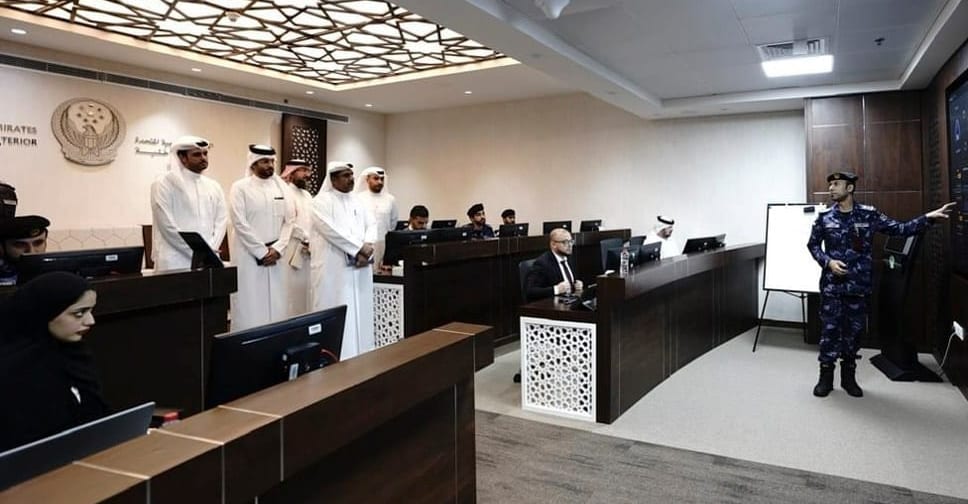 Bahraini delegation reviews UAE security technology and AI systems