

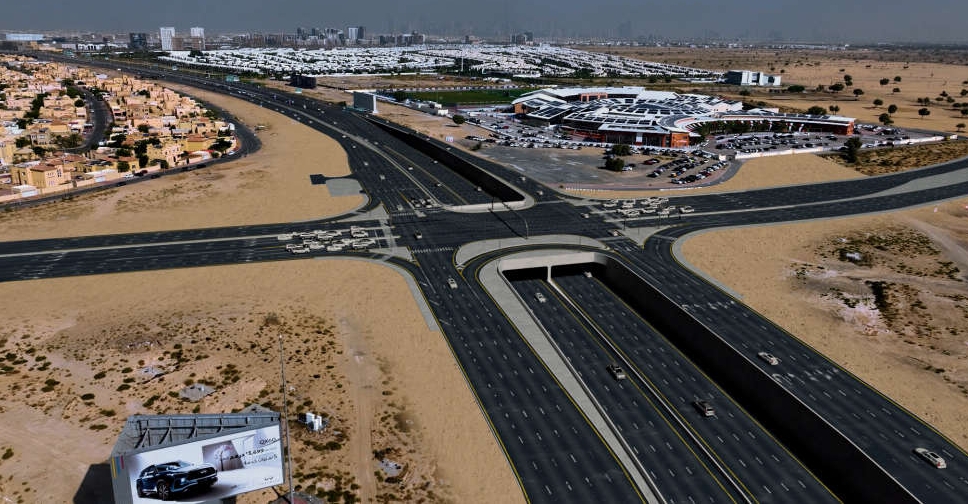
Dubai’s Roads and Transport Authority (RTA) has opened an 800-metre four-lane underpass that will cut travel time between Sheikh Mohammed bin Zayed and Al Khail roads by 61 per cent, dropping from 9.7 minutes to 3.8 minutes.
It's part of the Umm Suqeim Street Development Project that aims to enhance connectivity between four strategic corridors - Sheikh Zayed Road, Al Khail Road, Sheikh Mohammed bin Zayed Road and Emirates Road.
Making the announcement on Sunday, Mattar Al Tayer, Director General, Chairman of the Board of Executive Directors of RTA, said the underpass will "increase the capacity of Umm Suqeim Street to 16,000 vehicles per hour in both directions and improve traffic flow".
It will also "serve several residential and development areas, including Al Barsha South 1, 2, and 3, Dubai Hills, Arjan, and Dubai Science Park, home to a population of over one million".
Dubai’s Roads and Transport Authority opens an 800-metre tunnel with four lanes in each direction, as part of the Umm Suqeim Street Development Project, which extends from the intersection with Al Khail Road to the intersection with Sheikh Mohammed bin Zayed Road. The project… pic.twitter.com/eUyyPb0kyh
— Dubai Media Office (@DXBMediaOffice) August 3, 2025
Al Taye added that “the Umm Suqeim Street Development Project extends from the intersection with Al Khail Road to the intersection with Sheikh Zayed Road, covering a distance of 4.6 km". It also "included upgrading the intersection of Umm Suqeim Street with Al Barsha South Street, near Kings’ School and "a signalised surface-level intersection".
He added that the “completed project is part of a comprehensive plan to develop the Umm Suqeim–Al Qudra corridor, which extends from the intersection with Jumeirah Street to the intersection with Emirates Road, spanning a total of 16 km".
It is "considered one of the most important strategic projects for developing transverse east–west roads to enhance connectivity with vertical north–south roads".
Deploying smart tech
The RTA used drones to analyse construction data using artificial intelligence, enhancing operational efficiency on-site, accelerating decision-making, and providing real-time, highly accurate information.
These technologies also doubled on-site presence, reduced the duration of field surveys by 60 per cent, and improved overall monitoring. Additionally, time-lapse imaging was employed to continuously track construction progress, increasing monitoring efficiency by 40 per cent.

 Two face legal action over offensive social media broadcast
 UAE expresses solidarity with Greece, Denmark after helicopter crash
 UAE, Qatar discuss regional developments and security
 1 dead, 5 injured after gas cylinder blast at Dubai car showroom
 Rain alert for parts of UAE
 Dubai sets up media committee to counter fake news, misinformation
 UAE marks 1,000 days of humanitarian mission supporting Gaza
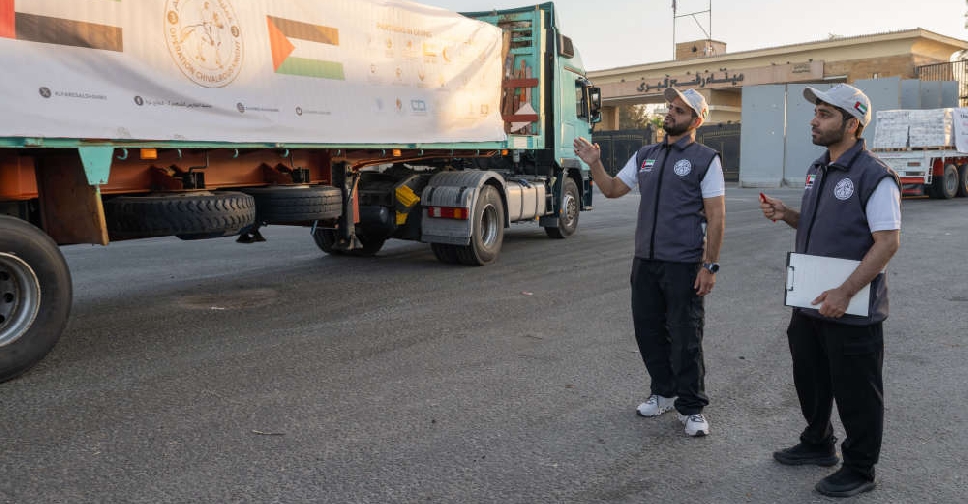 UAE continues to send more aid convoys to Gaza