

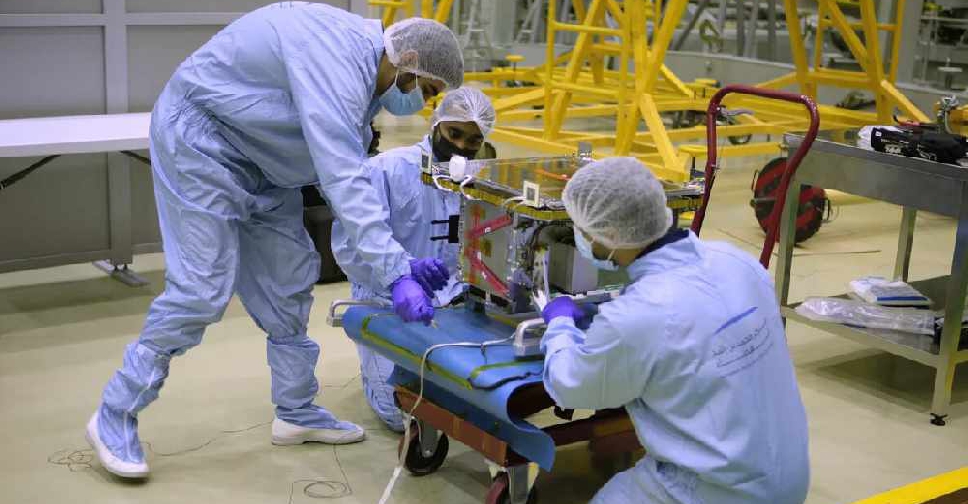
Dubai Municipality and Mohammed Bin Rashid Space Centre (MBRSC) are set to launch the region’s first environmental nanometric satellite.
The DMSat-1, which will take-off from the Baikonur Cosmodrome in Kazakhstan on March 20, will enable the entities to " respond to global environmental changes, identify steps to combat climate change and develop long-term environmental plans".
The data will help monitor, collect and analyse data as well as measure air pollutants and greenhouse gases, and develop long-term plans to address urban pollution.
The project was implemented in close collaboration with a team from the University of Toronto (UofT), which has extensive experience in the manufacturing and launching of this type of satellite.
The launch of the satellite strengthens the UAE’s implementation of the Paris Climate Agreement, which requires the country to generate data on greenhouse gas emissions and build national capacities to study global warming.
On a local level, the DMSat-1 seeks to calculate the rate of carbon dioxide emissions in relation to GDP as outlined in the Dubai 2021 Plan.
It will also help with studying the environmental impact of the Dubai Clean Energy
Strategy 2050 and the results of the UAE Energy Strategy 2050, as well as contribute to the ‘National System for Greenhouse Gas Emissions Management’ that is part of the National Climate Change Plan 2017-2050.


 Over 800 arrested in UAE-led operation to fight environmental crime in Amazon basin
 Dubai expands road capacity on key traffic corridor
 Dubai Police correctional establishments recognised for human rights excellence
 Two face legal action over offensive social media broadcast
 UAE, Bahrain foreign ministers discuss regional developments
 UAE sets up health camp for children with congenital heart disease in Zanzibar
 UAE expresses solidarity with Greece, Denmark after helicopter crash
 UAE, Qatar discuss regional developments and security