


Pakistan's parliament approved a constitutional amendment on Wednesday to expand the powers of the country's army chief and curb the remit of its Supreme Court, in a move that critics say damages democracy.
The lower house of parliament approved the legislation with a more than two-thirds majority, with only four lawmakers voting against.
The upper house passed the bill two days earlier after the opposition boycotted the debate — an unusually swift passage for a constitutional change. Such amendments usually require weeks or months of consideration.
The amendment will become law once signed by the president, a formality.
Army chief Asim Munir will now be elevated to the new post of Chief of Defence Forces, formally taking command over the navy and air force too. After completion of his term, he will retain his rank and have legal immunity for life.
Also under the changes, constitutional cases will be taken away from the Supreme Court and instead go before a new Federal Constitutional Court, whose judges will be appointed by the government.
In recent years, the Supreme Court has blocked government policies and ousted prime ministers.
Critics say the changes concentrate power in the hands of the military and the ruling coalition. The opposition Pakistan Tehreek-e-Insaf (PTI), founded by jailed former premier Imran Khan, said it had not been consulted on the legislation.
The military has long wielded extensive influence in Pakistan’s politics, but the reforms give it greater constitutional backing that would be difficult to reverse.

 Five Turkish soldiers killed in helicopter crash
 Hostages held in Colombia supermarket after failed carjacking
 11 injured in Houthi attack on Riyadh financial district tower
 Explosion kills 6, injures 10 in Vietnam capital Hanoi
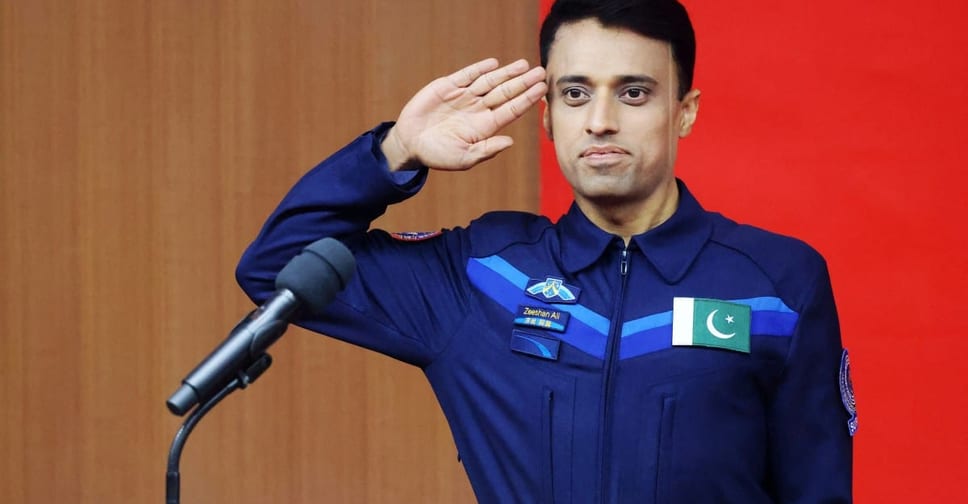 Pakistani pilot to become first foreigner to fly to China's space station
 Sheikh Hasina seeks to return to Bangladesh on December 16 on state carrier
 Israeli airstrikes kill at least six Palestinians in Gaza, medics say
 Israeli airstrike kills at least 3 Palestinians in southern Gaza, medics say