

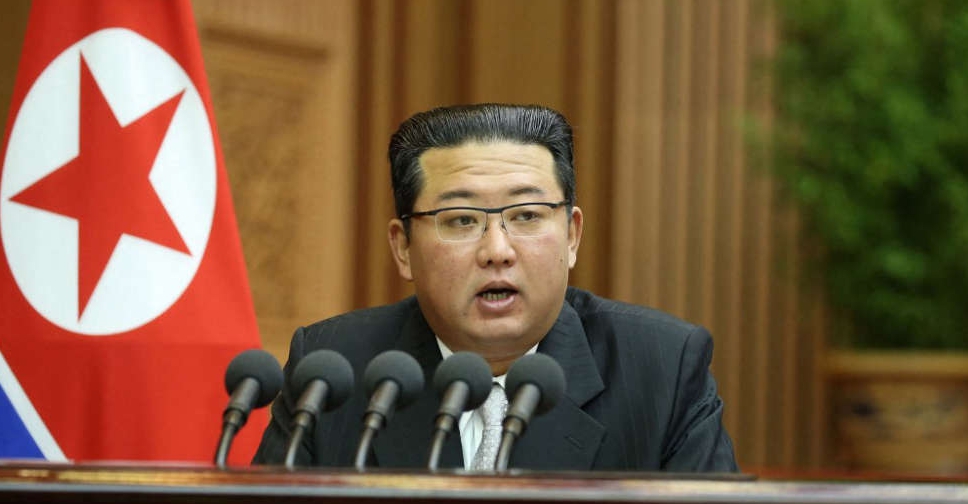
North Korea's Supreme People's Assembly has voted to scrap all agreements with South Korea on promoting economic cooperation, the North's official KCNA news agency reported on Thursday, as the two Koreas' ties continue to deteriorate.
The assembly, which takes formal steps to adopt policy decisions of the ruling Workers' Party, also voted to abolish laws governing economic ties with Seoul, including the special law on the operation of the Mount Kumgang tourism project.
The tours to the scenic mountain just north of the eastern border were a symbol of economic cooperation that began during a period of engagement between the two Koreas in early 2000s, drawing nearly 2 million South Korean visitors.
The project was suspended in 2008 after a South Korean tourist who strayed into a restricted zone was shot and killed by North Korean guards.
Hyundai Asan, an affiliate of the Hyundai Group conglomerate which invested more than 750 billion won in developing the Kumgang project, declined to comment on the report.
South Korea's Unification Ministry, which handles ties with Pyongyang, said the North's action was not surprising and would only deepen its isolation. Seoul does not recognise the unilateral move, an official added.
The KCNA report did not mention the North's special law governing another major joint economic project, the Kaesong industrial zone, which at its peak housed the factories of 125 South Korean companies employing 55,000 North Korean workers.
The companies pulled out and the factory zone shuttered in 2016 when Seoul suspended the project after the North's fifth nuclear test and long-range ballistic missile launches.
In January, South Korea closed a state-run foundation that supported the development and operation of the Kaesong industrial zone, which at the time was considered a sign that Seoul viewed the project was unlikely to be revived.
'NOT RATIONAL'
North Korea has said it considers the South as an enemy at war and last year scrapped a military pact signed in 2018 aimed at de-escalating tensions near the military border drawn up under a truce ending the 1950-53 Korean War.
In a pre-recorded interview with state TV KBS aired late on Wednesday, South Korean President Yoon Suk Yeol called the shift in North Korea's inter-Korea policy "an extraordinary change" but said it was hard to understand the thinking behind the move.
"What hasn't changed is that the North has tried for more than 70 years to turn us into Communists, and while doing that, it realized its conventional weapons were insufficient so they went onto nuclear development to threaten us," he said.
Yoon, who has taken a hard line against Pyongyang, said he remains open to engaging the North, even by holding a summit meeting with Kim, and provide aid if it would help its economy, but said the North Korean leadership is "not a rational group."
Since taking power in 2011, Kim has pushed the North to develop nuclear weapons and ballistic missiles even as its economy languished.
KCNA separately reported that Kim on Wednesday toured factories producing consumer goods and food, and gave guidance on modernizing the facilities as part of implementing a new regional development policy.

 11 injured in Houthi attack on Riyadh financial district tower
 Explosion kills 6, injures 10 in Vietnam capital Hanoi
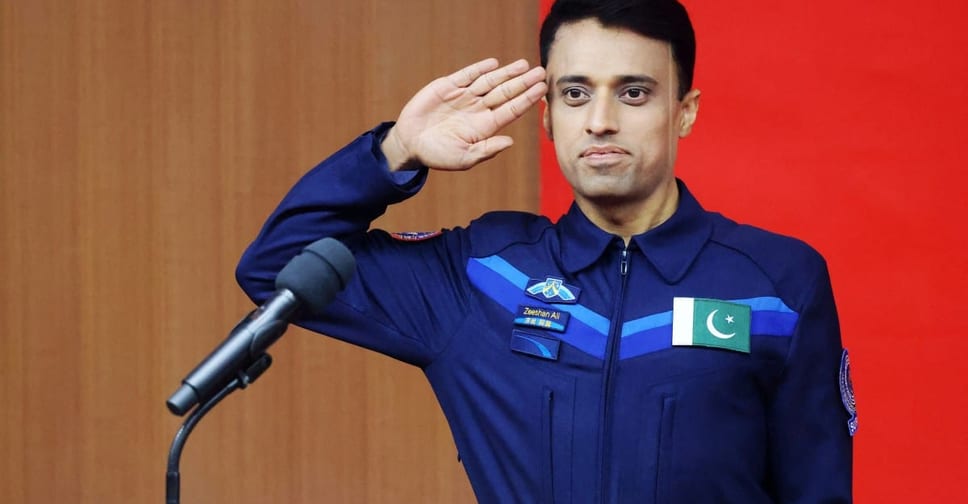 Pakistani pilot to become first foreigner to fly to China's space station
 Sheikh Hasina seeks to return to Bangladesh on December 16 on state carrier
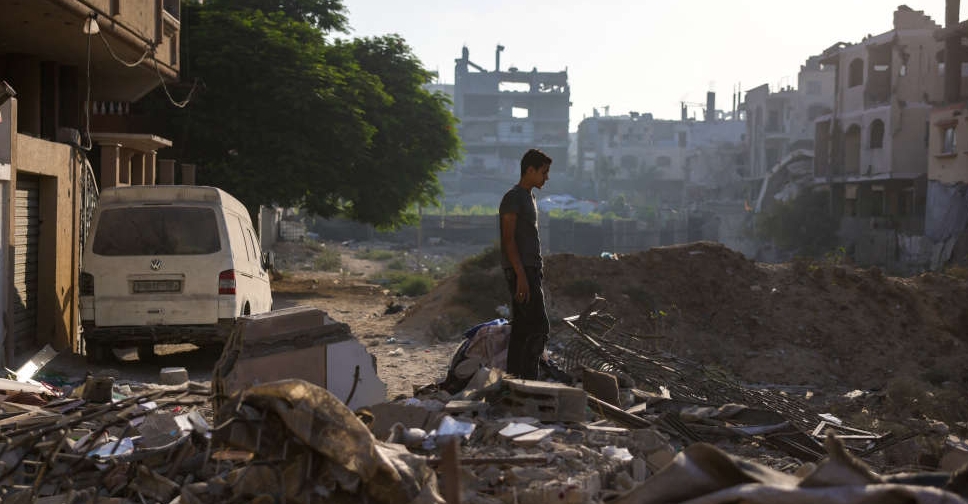 Israeli airstrikes kill at least six Palestinians in Gaza, medics say
 Israeli airstrike kills at least 3 Palestinians in southern Gaza, medics say
 South Korea toughens school exam rules after smart-device cheating scandal
 Russian attack on Ukraine's Dymer in Kyiv region kills 11, official says