

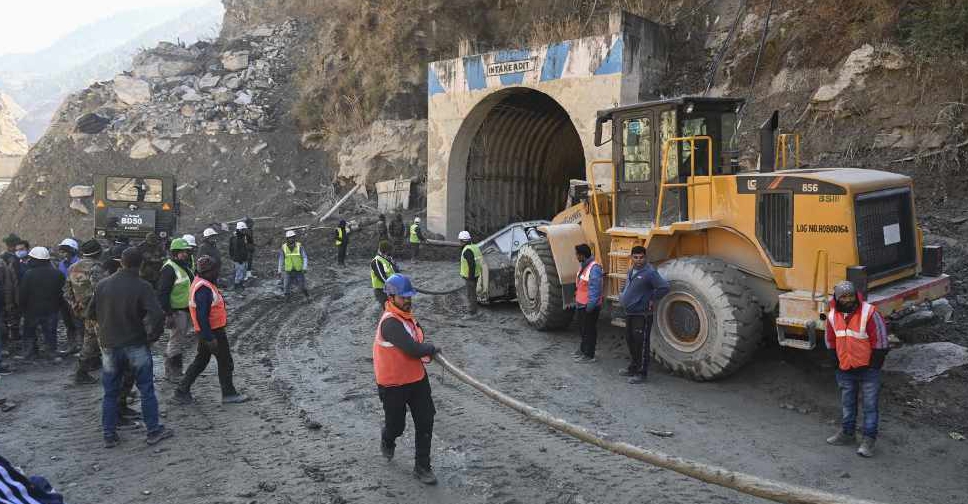
Rescuers pulled out nine more bodies from the site of a flash flood in a Himalayan region of northern India, a week after the disaster struck, bringing the death toll to 50 with more than 150 people still missing.
The flash flood in Uttarakhand state, triggered by what scientists said could have been a large avalanche of glacier ice, sent water, rocks and debris surging down the Dhauliganga river valley, destroying dams and bridges.
Rescuers are using heavy digging machinery in race to free dozens of dam construction workers trapped in an underground tunnel connected to a hydroelectric project being built by the government-owned National Thermal Power Corporation.
"We have not lost all hope yet. We hope to find more survivors," the top government official in the region, Swati Bhadoriya told Reuters.
Authorities said 154 people were still missing.
Experts have cautioned there could be still be huge amounts of rock, debris, ice and water that could be dislodged, making rescue efforts risky.
Uttarakhand is prone to flash floods and landslides. The disaster has prompted calls by environmental groups for a review of power projects in the ecologically sensitive mountains.
A team of scientists are investigating if a piece of a Himalayan glacier did fall into water and trigger the flood.
There are about 10,000 glaciers in the Indian Himalayas. Uttarakhand itself has up to 1,495 glaciers and many are receding due to the warming climate.


 Trump touts $5,000 payout if Republicans win as Vance waits in wings
 Search expands after Philippine ferry fire kills five and leaves dozens missing
 Trump says Iran war to end after US midterm elections
 US military says it struck vessel in Caribbean, killing 3
 At least 14 killed in explosion at weapons depot in Syria
 US hits five Iranian oil tankers after attack on Navy ships
 UK gives air traffic provider a week to probe outage that halted flights
 Serbia's President Vucic dissolves parliament, calls snap elections