

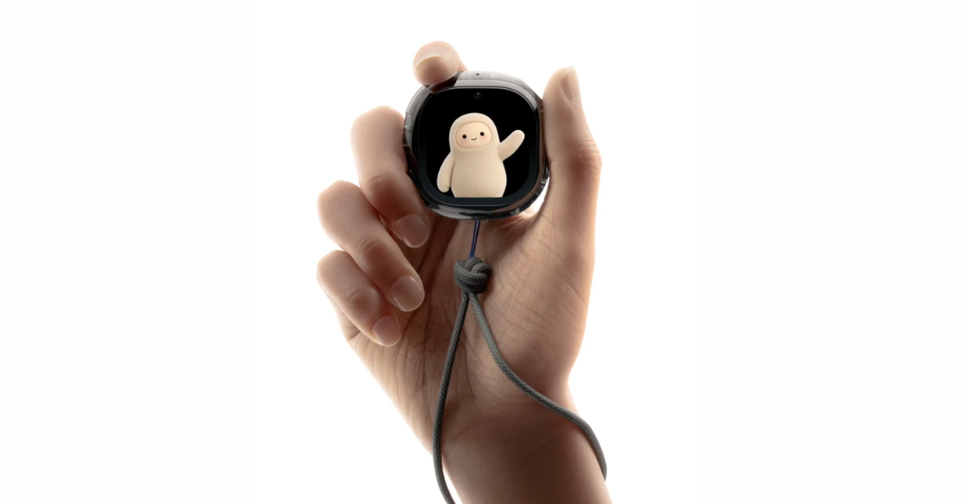
Meta CEO Mark Zuckerberg on Wednesday has unveiled a small handheld gadget called Meta Charm for using its new Muse AI assistant, taking the company's hardware efforts beyond its successful smart glasses.
The AI device, about the size of an Apple AirPods case, features a roughly 2-inch touchscreen and a built-in 5G connection. Meta said Charm would be ready to ship for the holidays in December, but did not give a price.
"We pack the whole Muse experience, including the whole real-time voice and avatar stack, into something that fits on a keychain and is always available to talk to," Zuckerberg said at Meta's annual device event, Meta Connect, in Menlo Park, California.
Meta's surprise announcement comes as Silicon Valley searches for a successor to the smartphone, pouring billions into devices designed around AI assistants that can see, hear and respond to the world around them.
From smart glasses and wearable pins to handheld gadgets, companies are betting AI will reshape how consumers interact with technology. It remains unclear which form factor will reach mainstream status.
Meta itself started with AI glasses, turning its EssilorLuxottica Ray-Ban partnership into one of the first successes in that category.
On Wednesday, the social media giant also showed off its first virtual-reality device slim enough to pass for glasses, and a pair of camera-free smart glasses designed to ease the growing privacy backlash against AI devices that can take videos and pictures of people without consent.
META GADGETS WILL HAVE MUSE
The company also expanded its viral Muse AI assistant across its smart glasses lineup, adding new capabilities including computer use and integration with retailers and services such as Walmart, Best Buy and Gap.
Meta said Muse would become the primary interface for its glasses, allowing users to shop, make appointments and complete tasks through voice commands.
Meta VR Glasses, priced at $1,299, aim to match the capabilities of bulkier and costlier rivals such as Apple's Vision Pro. The device weighs about as much as a deck of playing cards, a design made possible by moving the battery and the processor into a separate puck. They will launch in spring 2027.
Meta is betting the VR device, which looks like a pair of dark wraparound frames and responds to eye, voice, and hand gestures, can finally take to the mainstream a category long held back by high prices and heavy headsets that are uncomfortable to wear for hours.
"Bringing the weight down to around 100 grams is impressive and could improve the user experience," said Linda Sui, founder of Smart Analytics Group, a market research firm.
"However, the core use cases remain broadly similar to previous VR headsets. The higher price could also make it difficult to reach mainstream consumers."
The new camera-free glasses, called Ray-Ban Meta Audio, will still record audio and offer no clear signal to bystanders that recording is underway, unlike its smart glasses with a camera, which flash a light while filming. Critics say dropping the cameras alone may not be enough to ease privacy concerns.
The Meta Audio glasses are the latest made through the company's EssilorLuxottica tie-up and will ship from October 13 at a starting price of $349. That is $100 cheaper than the latest version of its Ray-Ban glasses, which continue to have cameras and will come in two new styles: the iconic Aviator and cat-eyed Zena.
Meta has been the focal point of growing concerns about devices that work better the more they see and hear, prompting privacy lawsuits and bans at some UK venues.
The outcome of the privacy debate could shape a market that technology firms, including Meta, see as the next major computing platform and a potential replacement for smartphones.
Losing the cameras has let Meta build its thinnest pair yet, weighing as much as a golf ball, and opened up new designs such as the browline Clubmaster and squared, retro Burbank
. It also stretched battery life to 12 hours on a single charge, compared with nine hours on the latest, third-generation Ray-Ban glasses.

 UAE Central Bank sanctions Bank Melli Iran over compliance breaches
 India-New Zealand free trade pact to come into force on October 20
 Parkin implements smart parking system at Dubai Health facilities
 US and China begin talks ahead of Trump-Xi summit
 Mohammed bin Rashid Leadership Forum to bring 1,000 leaders to Dubai