

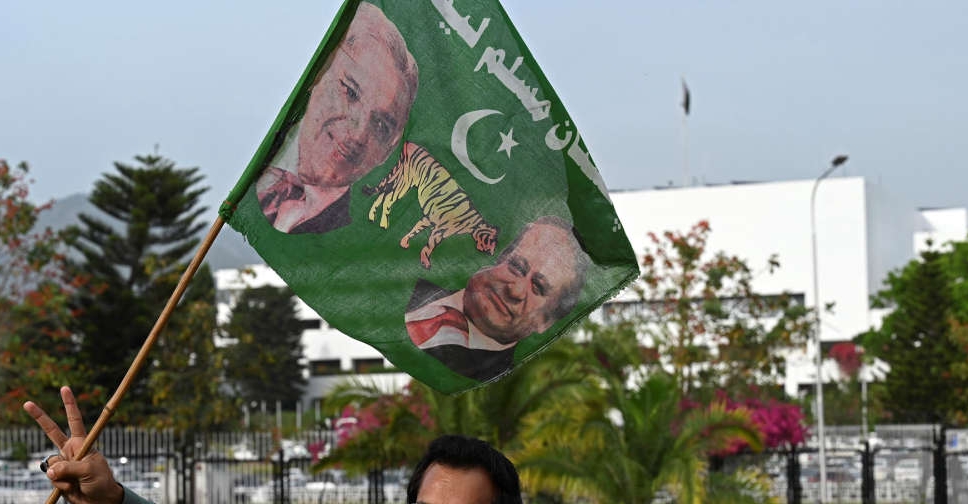
Pakistan's new ruling alliance took control of the lower house of parliament with the election of a new speaker, cementing control of the assembly after former premier Imran Khan was ousted in a no-confidence vote.
The previous speaker and his deputy, both Khan allies, had attempted to block and then delay the vote, only for the country's top court to deem their actions illegal.
The lower house of parliament eventually voted in favour of removing Khan from office on Sunday.
The new ruling alliance has already elected their candidate, Shehbaz Sharif as the new prime minister.
The new speaker is Raja Pervaiz Ashraf, a former prime minister who belongs to the Pakistan Peoples Party (PPP), part of the new ruling alliance. He was elected unopposed in the absence of Khan's party, which resigned en masse from the house on Monday.
"Raja Pervaiz Ashraf took oath as the 22nd Speaker of the National Assembly of Pakistan," said a Twitter account run by the staff of Pakistan's National Assembly, the lower house of parliament.
The resignations are yet to be fully processed. If accepted, Pakistan faces the prospect of close to 100 by-elections within two months, a major distraction for Sharif and his coalition partners and a potential platform for Khan to mobilise support. Read full story
Sharif is expected to name his cabinet in the coming days with a number of policy challenges facing the new government, in particular dealing with an economy in deep trouble.


 Two Palestinian teens killed in West Bank raid by Israeli settlers, army
 Chinese students marooned in floods unleashed by Typhoon Saudel's rains
 Kuwait air defences deal with Iranian missile, drone attacks
 US and Iran exchange attacks as lull in war appears over
 Malta court clears businessman over murder of investigative journalist
 Kuwait confirms no injuries after Iranian drone hits residential complex
 Nepal flood rescue hopes dim as China restores access to Tibet disaster zone
 At least 21 die in bus accident in Egypt's South Sinai, ministry says