

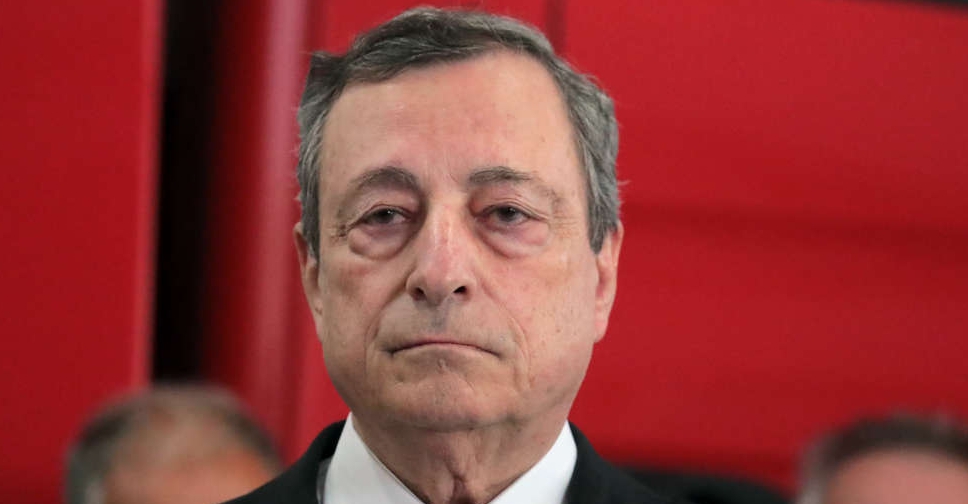
Italy's president rejected the resignation of Prime Minister Mario Draghi on Thursday after a day of political drama that threatened to bring down a national unity government that has been in office less than 18 months.
Draghi, the former European Central Bank (ECB) president, announced he was to resign on Thursday after the 5-Star Movement, a coalition party, failed to back him in a confidence vote over his plan to combat soaring prices.
"The national unity coalition that backed this government no longer exists," said Draghi, who has been prime minister of a broad coalition since February 2021.
Draghi, 74, went to the Quirinale Palace in Rome to meet President Sergio Mattarella and hand in his resignation but Mattarella, the supreme arbiter in Italian politics, urged him to rethink.
Mattarella asked Draghi, who is an unelected technocrat, to address parliament to get a clearer picture of the political situation.
Draghi is expected to appear in parliament next Wednesday and is likely to proceed before then with a planned trip to Algeria, an important gas supplier, on Monday and Tuesday, political sources said.
Divisions among Italy's political parties over issues such as the rising cost of living and how to respond to Russia's invasion of Ukraine are being amplified by the approach of a general election due to be held in the first half of 2023.
Draghi, Italy's sixth prime minister in the past decade, has won plaudits for helping to steer Italy through the coronavirus crisis and his profile has helped give the country more clout on the international stage.


 UN establishes task force to address Hormuz navigation challenges
 Iran-linked hackers breach FBI director's personal email
 Trump extends deadline for striking Iran's energy plants to April 7
 Israeli evacuation orders uproot 370,000 children in Lebanon, UN says
 UN rights chief urges US to conclude probe into deadly Iran school strike
 No injuries reported as Kuwait Shuwaikh Port comes under drone attack
 IRGC-linked cells targeting Bahrain referred to Criminal Court
 Austria plans social media ban for children under 14