
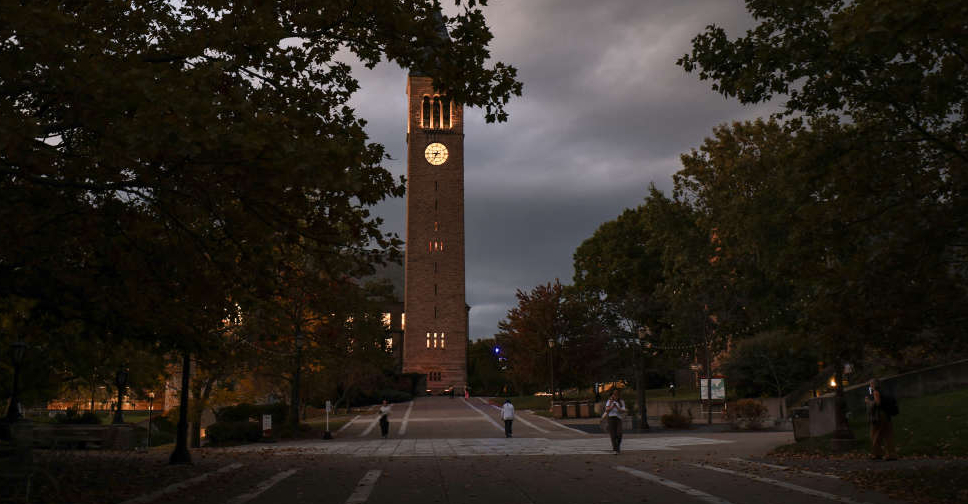
Cornell University will ban parties and social events at fraternity houses until the end of the academic year, its president said on Tuesday, responding to the outcry over an alleged gang abuse on campus in 2024.
The measure is the strongest reaction yet from Cornell's leadership to a lawsuit filed by a former undergraduate, Jane Doe, alleging seven men sexually assaulted her during a party.
Over the last several weeks, the Ivy League school in Ithaca, New York, and its president, Michael Kotlikoff, have come under heavy criticism from students, faculty, and donors over its response to the allegations.
The suspension of parties and social events will apply to Interfraternity Council houses. The council website says Cornell currently has 34 fraternity houses.
"These measures will provide time for a thorough review of fraternity life at Cornell to determine whether and how it can safely continue," Kotlikoff said in the statement.
The Cornell Interfraternity Council did not immediately reply to a request for comment.
Prosecutors reopened the investigation into the alleged gang abuse after the lawsuit was filed. New York state Governor Kathy Hochul appointed New York Attorney General Letitia James as an independent special prosecutor in the case, citing the earlier failure to protect the alleged victim.
President Donald Trump repeated on Tuesday his call to take James, his longtime critic and an elected Democrat, off the case.
"The Governor should take James off this case, immediately," Trump posted on Truth Social.
Trump first questioned James' appointment in early October, but his comments did not prompt any action by officials. The offices of Hochul and the attorney general did not immediately reply to requests for comment.
Since the lawsuit against seven fraternity members, the university and others was filed in September, the Cornell administration has faced student protests, a pending no-confidence resolution from faculty, criticism by alumni, and a public assembly where students blamed university officials for tolerating what they described as a culture of sexual violence.
None of the men named in the lawsuit have been criminally charged.
"I have spent the past weeks listening to students, faculty, staff, parents, alumni, and trustees, who have shared their feelings of deep connection and sympathy with Jane Doe, anger and frustration that this could happen at Cornell," Kotlikoff said.
"Women on our campus continue to question whether they are safe," he said, adding that additional staff would be hired to support survivors of sexual assault.
Cornell will also work with New York State Police to investigate incidents, he said, and accelerate previous recommendations put forward by a task force on sexual violence.
Thirty-five percent of undergraduate women reported experiencing non-consensual contact involving force or incapacitation since entering Cornell, according to a university survey conducted in 2025 and published on its website.
"We must meet this moment by acknowledging where we have fallen short and taking meaningful action," Kotlikoff said.

 At least 17 killed in stampede at festival in India's Kolkata
 French police clash with protesters as thousands rally over cost of living
 French protesters take to streets over rising prices and social strain
 Egypt's Sisi says his presidency will end in 2030
 Kenya confirms 4 new Ebola cases, bringing total number to 7
 Trump waives key Russia-related sanctions, tariffs before they take effect
 India's 'cockroach' movement founder released a day after detention
 Teacher and armed parent teamed up to stop Oregon school shooter, police say