

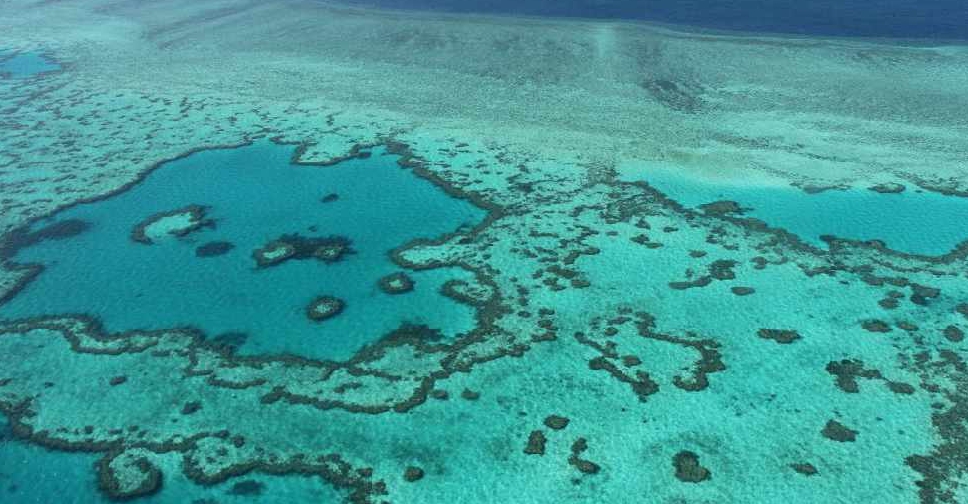
The Great Barrier Reef should be added to a list of "in danger" World Heritage Sites, a UN committee recommended on Tuesday, prompting an angry response from Australia which said it had been blindsided by the move and blamed political interference.
The long-term outlook for the world's biggest coral reef system had deteriorated and action was needed to counter the effects of climate change, said the United Nations Educational, Scientific and Cultural Organisation committee, which sits under UNESCO.
Australia's Environment Minister Sussan Ley said Canberra would challenge the recommendation, saying it went against the advice given just a week ago, and defended Australia's protection of the reef.
"This is a complete subversion of normal process," Ley said.
Australia has for years been battling to keep the Great Barrier Reef, a major tourist attraction that supports thousands of jobs, off the "in danger" list, a step that could potentially lead towards its eventual removal as a World Heritage Site.
In 2015, its lobbying included hosting UNESCO World Heritage delegates on a trip to an unspoiled stretch of the reef, but since then, scientists say, the world's largest living ecosystem has suffered three major coral bleaching events due to severe marine heatwaves.
Ley said she and Australia's Minister for Foreign Affairs Marise Payne raised their concerns overnight with the Director General of UNESCO, Audrey Azoulay.
"This decision was flawed. Clearly, there were politics behind it," she said, without elaborating.
A government source said Canberra believes China, which chairs the committee, is responsible for the move amid a souring of relations between the two countries.
"We will appeal but China is in control," the source said, declining to be named as he is not authorised to talk to the media.
China's embassy in Canberra did not immediately respond to a request for comment.
Environmental groups, however, rejected that the recommendation was political and said it was clear Australia was not doing enough to protect the reef, especially on climate change.
"There is no avenue for any government to have any input. This recommendation is reached by world-renowned scientists," said Richard Leck, Head of Oceans for the World Wide Fund for Nature, Australia.
Leck was part of a group of conservationists that lobbied 13 members of the UNESCO committee to reach its recommendation, which will now be considered by all 21 countries on the committee.
Australia is part of the committee, but by convention, it will not able to vote if a consensus is unable to be reached.
Australia's reliance on coal-fired power makes it one of the world's largest carbon emitters per capita, but its conservative government has steadfastly backed the country's fossil fuel industries, arguing tougher action on emissions would cost jobs.
Relations between Canberra and Beijing soured last year after Australia accused China of meddling in domestic affairs, and worsened when Prime Minister Scott Morrison sought an independent inquiry over the origins of the coronavirus pandemic.


 7 Indonesian airports remain shut due to volcanic ash from Anak Krakatau
 Israeli strikes on southern Lebanese town kill 11, state news agency says
 Nepal marks national mourning day after deadly flood
 Far-right AfD wins historic victory in German state election
 At least 5 killed in Amazon Prime Air cargo plane crash in Miami
 Israeli strike kills 2 in Gaza, medics say
 Bangladesh dengue outbreak accelerates as hospitals come under strain
 US peace envoys meet Zelenskyy in Kyiv after Putin talks